Amazon Associates Program Disclosure
As an Amazon Associate, Kazazone earns from qualifying purchases.
Three weeks ago you were happy with your gaming headset. Then ابن العم streamed a Valorant session to Discord and you realized his mic made yours sound like a walkie-talkie from 2008. Now you want to upgrade.
“PC audio setup” is a rabbit hole that starts at SAR 400 and ends with someone spending 12,000 SAR on a Schiit stack. Let’s stop you before that happens — the three pieces that genuinely change your Riyadh gaming room.
Best PC Gaming Audio Setup in Saudi Arabia 2025 — DAC + Open-Back + USB Mic Stack
Let’s be real for a second. A gaming headset is a compromise. The mic is okay, the audio is okay, the comfort is okay — nothing is great. For SAR 1,500 you get a very nice all-in-one. For SAR 1,600 split across three specialist pieces you get three great products that together crush any all-in-one gaming headset in existence. The catch: you need to buy three things instead of one, and know how they fit together.
The stack that genuinely works in a KSA PC gaming room, tested through a summer of Riyadh heat, ربع Discord calls, and weekend Warzone grinds: Creative Sound BlasterX G6 (SAR 399) as your DAC/amp brain, Sennheiser HD 560S (SAR 749) as your audiophile-grade open-back headphones, and Rode NT-USB Mini (SAR 449) as your streaming-quality USB mic. Full stack: SAR 1,597. Same price as a mid-tier gaming headset, dramatically better results.
This is the setup for the person who’s done with gaming headsets. Competitive FPS players get footstep directionality the Razer BlackShark physically cannot produce. Streamers get a mic that sounds broadcast-ready without an XLR interface. Audiophiles get an actual audiophile chain. And it still looks clean on a مجلس desk.
Kazazone Verdict
Start with the Creative Sound BlasterX G6 (SAR 399). It’s the brain. Without it, your Sennheiser HD 560S won’t even hit reasonable volume on a motherboard headphone jack. This is non-negotiable.
Then get the Sennheiser HD 560S (SAR 749) for the actual audio. Open-back, wide soundstage, competitive-FPS-grade positional accuracy. Finally, the Rode NT-USB Mini (SAR 449) handles your voice for Discord and the occasional stream. Full stop. Three pieces, done.
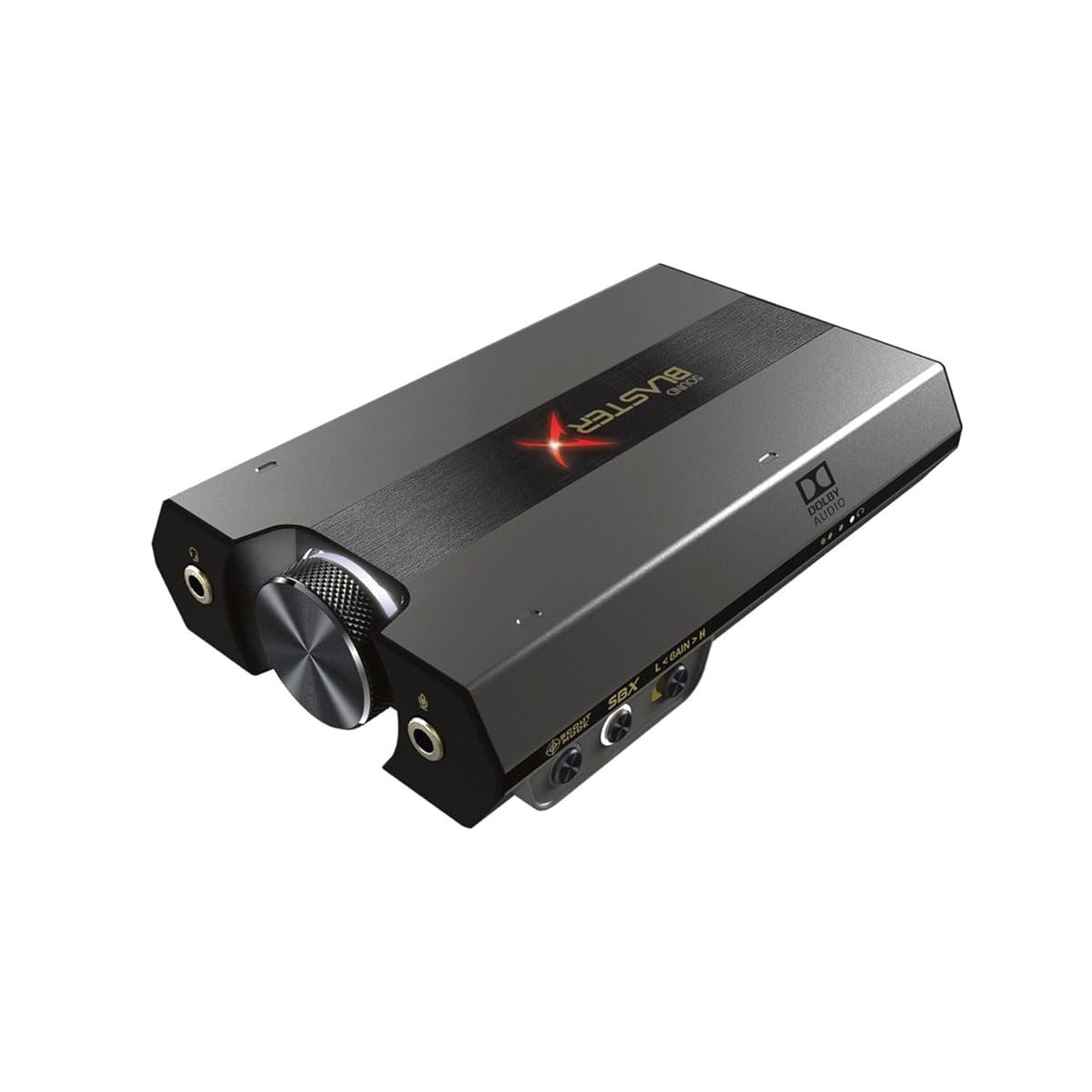
Creative Sound BlasterX G6
External USB DAC/amp • 32-bit 384kHz • Xamp discrete headphone amp • 7.1 virtual surround
The Sound BlasterX G6 is the SAR 399 product that quietly powers most serious PC audio setups in Saudi Arabia. A DAC (digital-to-analog converter) converts your PC’s digital audio to analog with dramatically better fidelity than your motherboard’s built-in chip. An amp drives high-impedance headphones like the Sennheiser HD 560S loud and clean. The G6 does both, over a single USB cable, for less than a third of what Schiit Audio charges for a comparable stack.
Creative’s killer feature here is Xamp — a discrete-component headphone amplifier built into a USB-powered device, which is genuinely rare at this price. The practical result: pair it with the HD 560S and you get headphone-out volume that rivals SAR 1,500 desktop amps. Scout Mode is the other Saudi-gamer-relevant trick: a software toggle that amplifies quiet frequencies (footsteps, reloads, menu sounds) without blowing your ears with explosions. It’s a legal advantage in Warzone that most PC gamers don’t know exists.
The software layer is the weakness. Creative’s desktop app is ugly, dated, and takes 30 seconds to open. Once it’s configured the way you want (EQ profile, Scout Mode bound to a hotkey, surround engine on or off), you rarely reopen it — so the bad UX is a one-time cost. Optical-in means PS5 works (audio only via optical, not party chat), Switch works, even a dedicated gaming TV can route through the G6 for late-night sessions without waking the family.
- Discrete Xamp headphone amp at this price
- Drives 120-ohm Sennheiser HD 560S cleanly
- Scout Mode is legit for competitive FPS
- Optical in — works with PS5 + Switch audio
- Creative software is ugly, dated
- USB-A only (need USB-C adapter on newer laptops)
- Cable is short (1.2m)
- No XLR in — pure USB audio only
| Connection | USB-A + Optical in/out + 3.5mm line + mic |
| DAC | 32-bit / 384kHz |
| Amp | Discrete Xamp, 600-ohm capable |
| Modes | Scout Mode, 7.1 SBX surround, custom EQ |
| Platforms | PC, Mac, PS5 (optical audio), Switch |
You’re upgrading from a gaming headset and want your PC audio to genuinely sound better — not just have more RGB. You want Scout Mode for Warzone and a USB solution that doesn’t require an XLR interface.
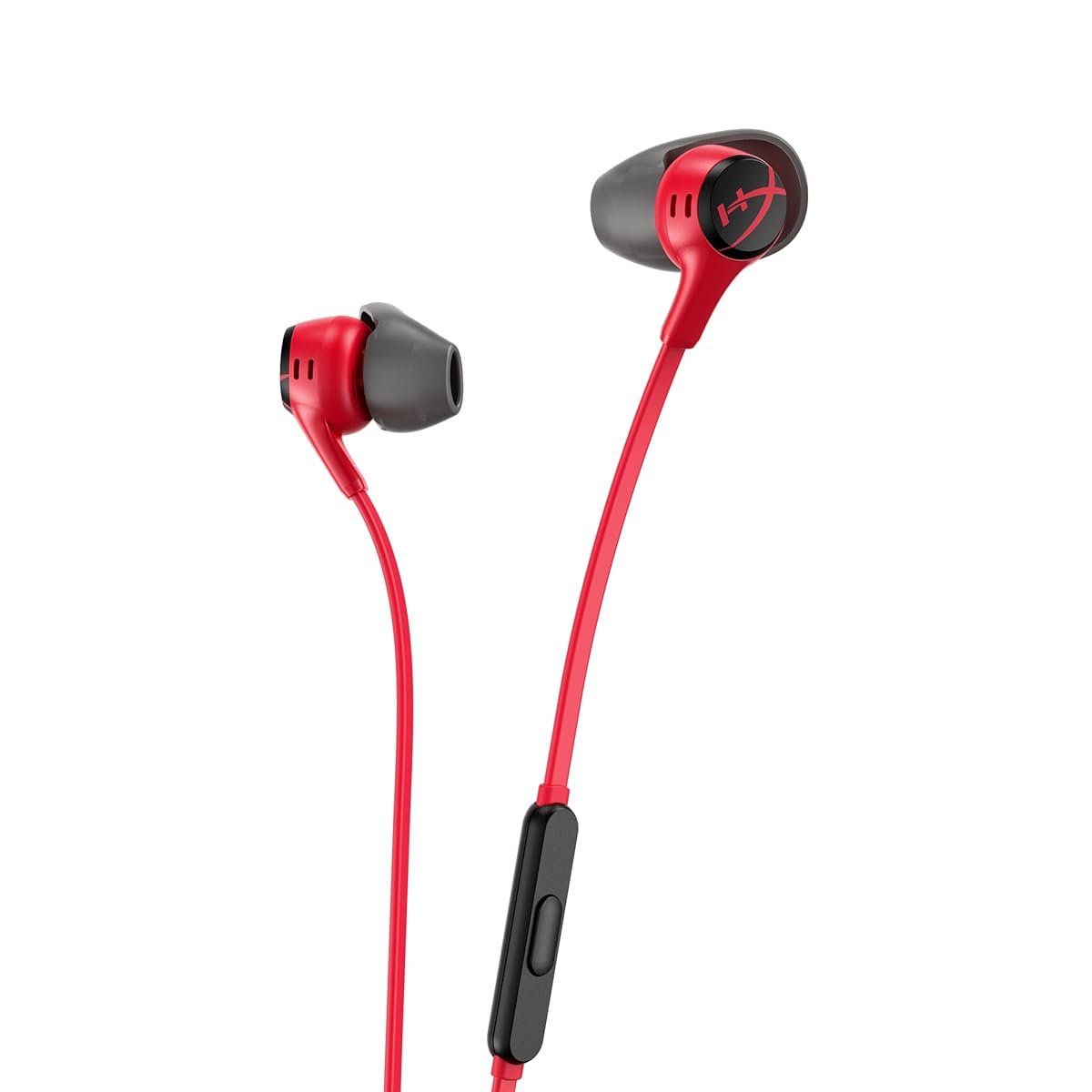
Sennheiser HD 560S
Open-back • 38mm drivers • 120 ohm • 240g • Velour earpads • No mic
The HD 560S is Sennheiser’s answer to “give me audiophile open-back sound for under SAR 800.” It’s genuinely the best headphone you can buy in KSA at this price for gaming — and it specifically outclasses every SAR 700–1,000 gaming headset in one critical area: soundstage. In Apex Legends and Warzone, the 560S renders footsteps and gunfire in a wide spatial field that lets you locate enemies with uncanny precision. Gaming headsets try to approximate this with virtual surround. The 560S delivers it natively through physics.
Open-back is the tradeoff. Sound leaks both ways — people next to you can hear the game, and you can hear the mukeif or the TV in the majlis down the hall. This is non-negotiable physics, not a flaw. If you game in a shared room, closed-back is better (consider the Beyerdynamic DT 770 Pro as an alternative). If you game in your own room or an office with a door that closes, open-back is a revelation. The velour earpads beat pleather in Riyadh summer by an absurd margin — no sweat-through, no sticky skin, no cracking at month 18.
No mic is the elephant in the room. The HD 560S is pure headphones — it pairs with the Rode NT-USB Mini (next section) to complete the stack. This is actually cleaner than a gaming headset’s boom mic because the Rode sits in front of you at desk-mic height, picking up broadcast-quality voice instead of the mouth-breath proximity-noise most gaming mics capture. At 240g the 560S is lighter than most gaming headsets, comfort is exceptional for 6-hour sessions, and the 120-ohm impedance means you genuinely need the Creative G6 to drive it — which is why the stack exists.
- Audiophile open-back soundstage
- Footstep directionality crushes gaming headsets
- Velour pads — no Riyadh summer sweat
- 240g — lighter than most gaming headsets
- Sound leaks both ways (open-back physics)
- No mic — must pair with separate mic
- Requires amp (120 ohm — hence the G6)
- Bass is accurate, not punchy
| Type | Open-back, circumaural |
| Drivers | 38mm dynamic |
| Impedance | 120 ohm (amp recommended) |
| Weight | 240g |
| Cable | 3m detachable, 6.3mm + 3.5mm adapter |
You game in a private room, you value audio fidelity over a boom mic being attached, and you care about competitive-FPS positioning. The Sennheiser lineage alone is the reason audiophile forums call this the best sub-SAR 1,000 headphone made.
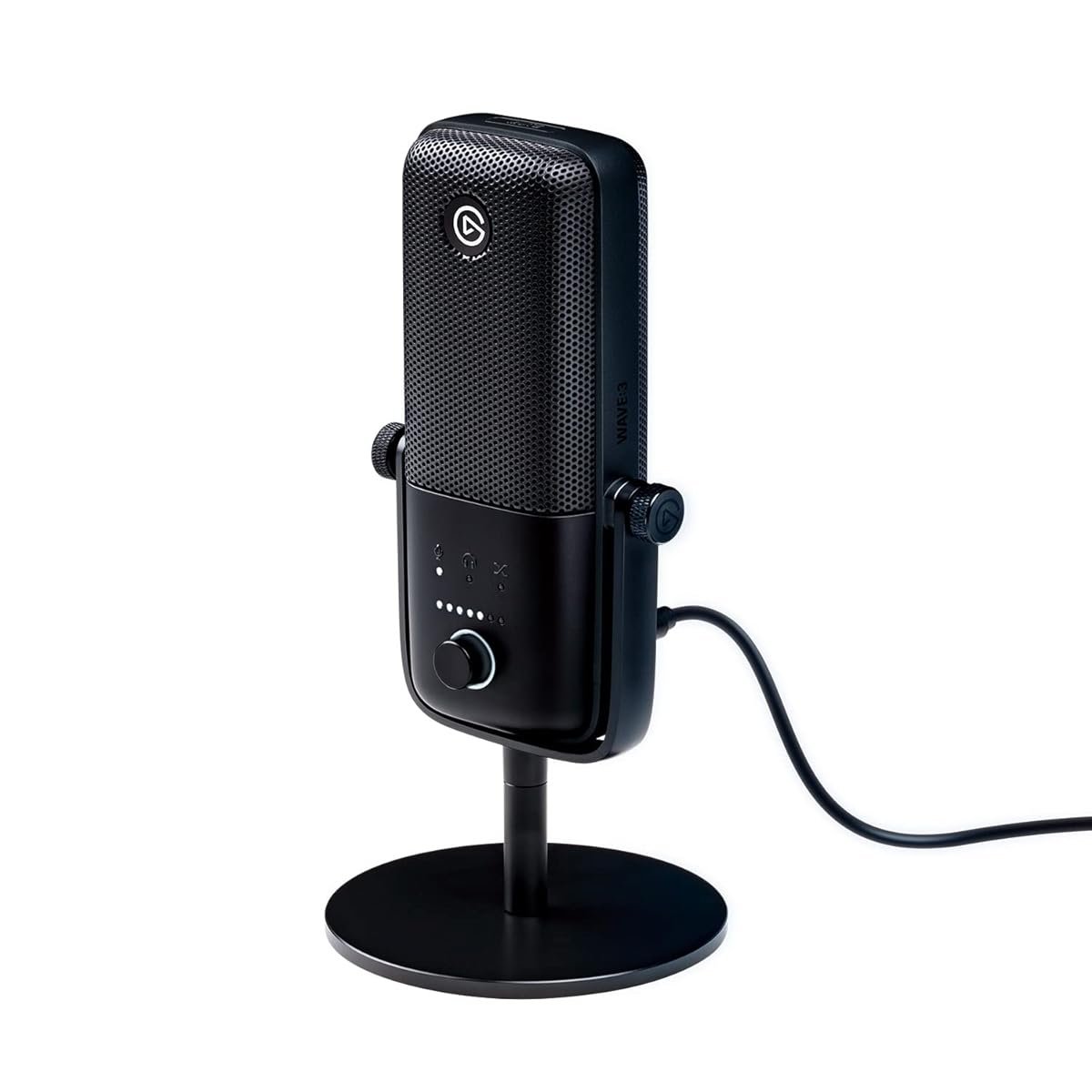
Rode NT-USB Mini
USB condenser • Cardioid • 24-bit / 48kHz • Built-in pop filter • Desktop stand included
Rode owns the broadcast-microphone category — their products are in actual recording studios in Riyadh and Jeddah. The NT-USB Mini is their entry-level USB solution, and “entry-level” means the mic ربعك actually hears on Discord will sound like you’re broadcasting from a studio instead of from inside a shoebox. That’s the step-change over any gaming headset boom mic or the built-in mic on most headphones — broadcast-grade voice, without needing an XLR interface or a boom arm or any serious setup knowledge.
Cardioid pattern means it picks up sound in front of it and rejects sound from behind — so when you’re on Discord, your voice comes through clean but the fan noise, PS5 next to you, or TV in the majlis behind you gets filtered out almost entirely. Built-in pop filter handles plosives (the “P” and “B” sounds that can pop into gaming headset mics). 24-bit/48kHz is broadcast-quality resolution. The small desktop stand that ships with it is stable enough for most setups — you don’t need a Rode PSA1+ boom arm unless you’re actually streaming to Twitch.
The headphone monitor pass-through is a quiet but great feature: plug your HD 560S (via the G6 output) into the NT-USB Mini’s 3.5mm jack, and you hear both game audio and your own mic voice at zero latency. No software setup, no Razer Synapse. Just works. Setup time from unboxing to first Discord call is under 3 minutes. It’s USB-C (a small but real upgrade over USB-B mics Rode shipped in 2020). Warranty is Rode’s 1-year international, honored through Rode’s regional dealer network — Amazon.sa’s sold-by-Amazon listings qualify.
- Broadcast-quality voice without XLR
- Cardioid pattern rejects majlis + fan noise
- Built-in pop filter — no “P” pops on Discord
- Zero-latency headphone monitor pass-through
- No gain dial (software-controlled only)
- Desktop footprint — takes space on crowded desks
- No mute button on the device
- USB-C cable is short (1.5m)
| Type | USB condenser, cardioid |
| Resolution | 24-bit / 48kHz |
| Connection | USB-C |
| Monitor | 3.5mm headphone out, zero-latency |
| Included | Desktop stand, USB-C cable, pop filter built-in |
You want broadcast-grade voice on Discord without the complexity of an XLR interface and boom arm setup. The NT-USB Mini is the mic equivalent of plug-and-play — professional quality, zero learning curve.
Hidden Costs (the math nobody tells you)
- Headphone cable length reality (Sennheiser HD 560S): The 3-meter cable is long enough for a chair-to-PC setup but awkward if your PC is on the floor behind the desk. A 1.5m replacement cable runs SAR 80–120 from Jarir or Amazon.sa. Worth budgeting if your setup is tight.
- Rode boom arm upgrade (Rode PSA1+): The desktop stand that ships with the NT-USB Mini works, but you’ll eventually want a boom arm that holds the mic at mouth-level and frees up desk space. Rode PSA1+ is SAR 499 — essentially matching the mic price. Not immediately needed, but real.
- USB-A to USB-C adapter (newer laptops): The Creative G6 is USB-A. Newer MacBooks, gaming laptops, and even desktop cases with USB-C-only front panels will need a USB-C adapter (SAR 25–50 at noon). Worth ordering with the G6 rather than after.
- Power reality for the G6: USB-powered means no external adapter, but bus power can drop on busy USB hubs. Plug the G6 directly into your PC’s motherboard USB ports (back of case), not into a hub or front-panel ports. Audio dropouts 6 months in usually trace back to this, not a hardware defect.
- KSA warranty paths — all three brands: Creative Middle East honors 2-year warranty through Jarir and Amazon.sa KSA listings. Sennheiser Middle East handles HD 560S warranty through authorized dealers — verify the seller is on Sennheiser’s ME list. Rode’s 1-year warranty routes through Rode Middle East’s regional dealer network — Amazon.sa listings with “sold by Amazon.sa” qualify. Grey-market listings on other marketplaces often void warranty silently.
Things Saudi Gamers Should Know Before Buying
This stack does not work without all three pieces. The Sennheiser HD 560S is 120-ohm impedance, which means a motherboard headphone jack cannot drive it to listenable volume. You need the Creative G6 (or an equivalent amp) to actually hear the 560S at gaming volume. Skip the G6 and the 560S sounds quiet and lifeless. Skip the HD 560S and the G6 is wasted on whatever headphones you pair it with. Skip the Rode and your voice on Discord still sounds like a gaming headset. The stack is the product.
Open-back in Riyadh summer requires a private room. The HD 560S leaks sound in both directions. If you game in the living room or a shared study, every family member can hear your Warzone footsteps and explosions, and you can hear the TV from the majlis down the hall. In a bedroom with the door closed, open-back is a revelation. Before buying, think about where you game. If it’s not private, consider Option B (Beyerdynamic DT 770 Pro closed-back) as the mental substitute.
The USB mic + open-back combo is the stealth pro streamer setup. Professional streamers in Saudi Arabia increasingly run exactly this configuration — audiophile open-back headphones with a separate broadcast mic — rather than a gaming headset. The reason: listeners on stream don’t hear the headphones (because they’re open-back and don’t have a mic pickup of game audio), they hear the clean condenser mic voice. This is why every major Twitch streamer’s setup looks like yours will.
Amazon.sa vs. Jarir for each piece. Creative G6 ships fastest via Amazon Prime KSA and is sometimes cheaper at noon during tech-focused sale events. Sennheiser HD 560S is most consistent at Amazon.sa with sold-by-Amazon fulfillment — Jarir stocks sporadically. Rode NT-USB Mini is reliably in stock at both Amazon.sa and Jarir physical stores in Riyadh and Jeddah. If you’re building the full stack, order from one retailer (Amazon.sa Prime) to get everything in 1–2 days and consolidated KSA warranty paperwork.
Haraj resale economics on component stacks. Unlike single gaming headsets that lose 40–50% on Haraj within 12 months, audiophile components hold value dramatically better. Sennheiser HD 560S retains roughly 70–75% after 12 months — Sennheiser brand recognition plus the headphone-community resale market keep demand strong. Creative G6 holds ~60%. Rode NT-USB Mini holds ~65%. If you ever want to sell the stack to fund an XLR upgrade, the depreciation math is much friendlier than with a gaming headset.
FAQ
Can I use this setup on console (PS5 or Xbox)?
Partially. The Creative G6 has an optical input, so you can route PS5 or Xbox audio to the G6 via an optical cable — the HD 560S then works on console audio. But console party chat requires a different mic routing because Sony and Microsoft lock USB-mic input behind their licensed accessories. The Rode NT-USB Mini works on PC, not on console chat. For pure console audio (no chat), the stack works; for chat, you need a separate solution.
Why not just get a SAR 1,500 gaming headset instead?
Price parity is roughly the same, but the stack outperforms in three specific areas: soundstage (open-back HD 560S beats every virtual surround headset ever made), mic quality (condenser USB mic sounds like studio, boom mic sounds like boom mic), and longevity (components hold value, gaming headsets depreciate fast). The only thing a SAR 1,500 gaming headset does better is wireless convenience — the stack is wired throughout.
Do I need to install Creative’s desktop software?
Recommended for first-time setup (EQ, Scout Mode toggle, surround engine) but the G6 works as a pure DAC/amp without any software installed. Configure once with Creative’s app, then uninstall if you want — the settings persist on the hardware. That’s the clean-setup path most audiophiles use.
Which is better for competitive FPS — HD 560S or a SAR 800 gaming headset?
HD 560S, genuinely not close. Open-back physics deliver footstep directionality that virtual-surround gaming headsets literally cannot replicate with current technology. The only caveat is open-back sound leakage, which is why gaming houses and tournament players often use closed-back competitive headphones like the Beyerdynamic DT 770 Pro instead. For home use, HD 560S wins.
Can I add a boom arm later?
Yes. The Rode NT-USB Mini is designed to mount on the Rode PSA1+ boom arm directly — no additional adapter needed. Budget SAR 499 for the PSA1+ when you’re ready. The desktop stand that comes with the mic works fine until then; the boom arm is purely for desk-space recovery and mic-to-mouth positioning for streaming.
Where in KSA can I hear the HD 560S before I buy?
Sennheiser’s official Saudi retail presence is concentrated in Jarir Olaya (Riyadh), Jarir Tahlia (Riyadh), and Jarir Jeddah Stars Avenue — call ahead to confirm the 560S specifically is in their demo rotation. If not available in person, Amazon.sa’s 30-day return policy is the safer path — order, test for a week, return if it’s not for you.
As an Amazon Associate, Kazazone earns from qualifying purchases. When you buy through our links, we may earn a small commission at no extra cost to you. This helps us keep creating honest, independent reviews for Saudi gamers.