Amazon Associates Program Disclosure
As an Amazon Associate, Kazazone earns from qualifying purchases.
You bought a good gaming headset or audiophile headphones. You plug them into your PC’s motherboard audio jack. They sound decent. You wonder why ابن العم’s $200 headphones somehow sound dramatically better.
The answer is: he has a DAC/amp. You don’t. Full stop. Here are the three that genuinely unlock what your headphones can actually do in KSA in 2025.
Top DAC and Amp Combos for Gaming in Saudi Arabia 2025 — FiiO E10K TC vs iFi Zen DAC V2 vs Schiit Fulla E
Let’s be real for a second. Your motherboard’s built-in audio is an afterthought. PC manufacturers spend literal cents per board on the audio chip because most users don’t care. The result: your headphones are being fed a compromised signal by a sub-SAR 5 component. A proper DAC/amp costs SAR 300–700 and transforms the audio in a way that’s genuinely audible within 30 seconds of plugging in.
Three dedicated audiophile DAC/amps in KSA in 2025 that gaming audiences should actually consider: FiiO E10K TC (SAR 299) as the entry-tier plug-and-play option, iFi Zen DAC V2 (SAR 599) as the mid-tier with MQA and balanced output, and Schiit Fulla E (SAR 699) as the premium pick with a gaming-aware microphone input. All three are specialist audiophile products, deliberately different from gaming-branded DAC solutions like Creative’s Sound BlasterX series.
Tested through a week of real Saudi gaming scenarios — PC Valorant ranked with Sennheiser HD 560S headphones, Apex Legends on console via 3.5mm, Discord calls with the ربع across three cities, and critical music listening to verify these are legitimate audiophile-grade products. Here’s how they stack.
Kazazone Verdict
First DAC? Start with the FiiO E10K TC (SAR 299). USB-C, bass boost toggle, drives most gaming headsets cleanly. Entry ticket to the audiophile world, real sound improvement over motherboard audio.
Serious about audio and willing to pay more? iFi Zen DAC V2 (SAR 599) — balanced 4.4mm output, MQA support for Tidal Masters, genuine audiophile chain. Gaming with a separate 3.5mm mic? Schiit Fulla E (SAR 699) — American-made, mic input rarely found in audiophile DACs.
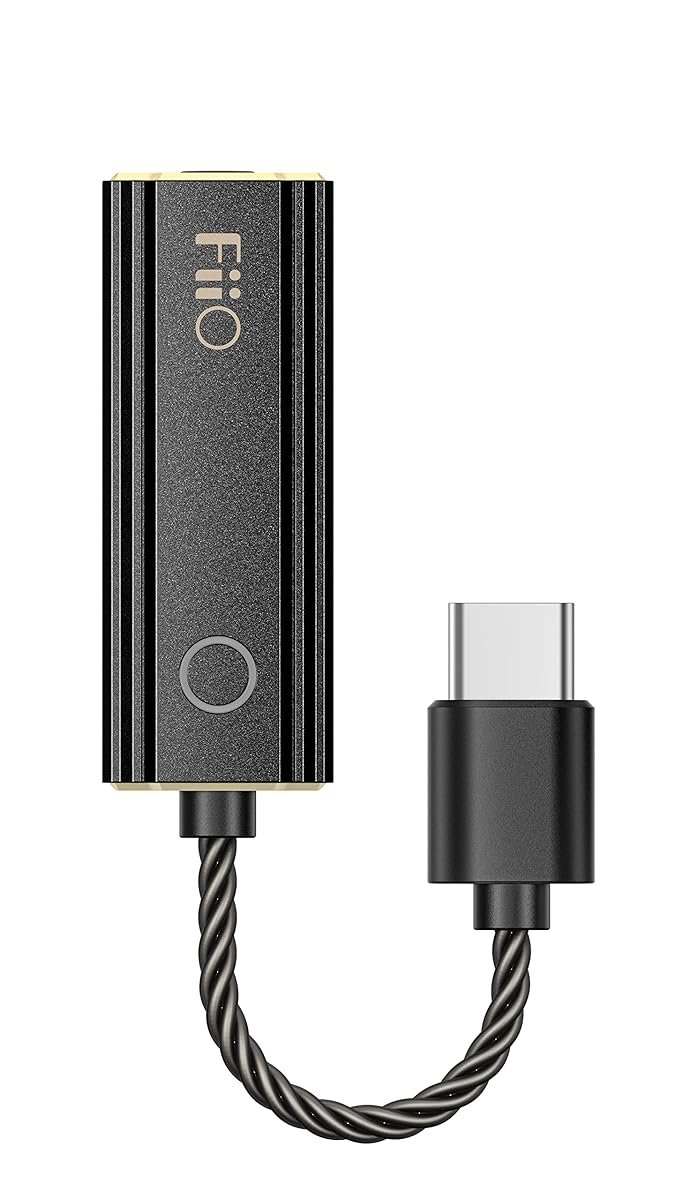
FiiO E10K TC
USB-C DAC/amp • PCM5102 DAC chip • 3.5mm + Line out + Coax • Physical bass boost • Plug-and-play
The FiiO E10K TC is the product that convinces Saudi gamers that external DAC/amps are worth buying. At SAR 299 it costs roughly the same as a mid-tier gaming headset and delivers audio improvement that’s genuinely audible within 30 seconds of plugging in. The Texas Instruments PCM5102 DAC chip is decades-proven silicon that reproduces detail and dynamic range far beyond motherboard audio. USB-C plug, no drivers on Windows 10/11, just works.
The physical bass boost toggle on the front is a small feature with outsized practical value. Flip it on for bass-heavy games like Call of Duty or movies, flip it off for detailed competitive FPS where you want clean mid-frequency footstep identification. This is the kind of quality-of-life feature more expensive DACs skip in favor of software EQ — and you realize quickly that a physical switch is better than a software menu. Drives most gaming headsets (up to ~100 ohm impedance) without issue.
The limitation is driving high-impedance audiophile headphones. Sennheiser HD 560S at 120 ohm is right at the edge of the E10K TC’s practical range — listenable but not optimal. Beyerdynamic DT 880 Pro at 250 ohm or 600 ohm versions will require the iFi or Schiit amps. For gaming headsets and most mainstream audiophile picks (Sennheiser HD 560S, Philips Fidelio X2HR, Audio-Technica ATH-M50x), the FiiO delivers the goods. Line out lets you daisy-chain to speakers or a separate amp if you upgrade later.
- Audiophile entry at SAR 299
- USB-C — modern laptops work natively
- Physical bass boost toggle
- Line + Coax outputs for upgrade path
- Can’t drive high-impedance (250+ ohm)
- No EQ or software tuning
- Basic plastic build
- No mic input
| DAC chip | TI PCM5102 (32-bit / 384kHz) |
| Connection | USB-C |
| Outputs | 3.5mm headphone + RCA Line out + Coax |
| Drives | 16–100 ohm headphones |
| Platforms | PC, Mac, Android |
This is your first DAC/amp, you want to upgrade from motherboard audio without spending big, and your headphones are mainstream gaming or low-impedance audiophile (Sennheiser HD 560S, Audio-Technica ATH-M50x).
iFi Zen DAC V2
USB-B DAC/amp • ESS Sabre DAC • Balanced 4.4mm + 6.3mm + RCA • MQA decoding • TrueBass + 3D+ analog circuits
The iFi Zen DAC V2 is the product that makes people stop saying “audiophile gear is overpriced” and start actually listening. The ESS Sabre DAC chip is the same silicon used in SAR 1,500+ high-end audiophile components, paired with an analog amp stage that sounds dramatically more refined than the FiiO’s digital implementation. The 4.4mm Pentaconn balanced output is the kind of feature you only see on products above SAR 1,000 — and it’s genuinely useful if you ever upgrade to balanced-cable headphones.
MQA decoding is a meaningful feature if you use Tidal Hi-Fi Masters or similar high-res streaming services. Saudi Arabia’s Tidal subscription tier is the same as worldwide, and MQA playback on the Zen DAC V2 genuinely unlocks higher-than-CD-quality streaming for subscribers. The TrueBass analog circuit is iFi’s signature bass-boost (physical switch, not software), and the 3D+ Matrix mode creates a subtle spatial widening that works surprisingly well for gaming audio — Apex footsteps take on a wider directional field, almost like a mini-THX Spatial without the software dependency.
Drives high-impedance headphones (32–300 ohm) comfortably — Sennheiser HD 560S sounds genuinely different on the Zen DAC V2 compared to motherboard audio, and Beyerdynamic DT 880 Pro at 250 ohm becomes practical to drive. The build is premium: silver aluminum chassis, satisfying volume knob, 6.3mm jack on the front. The catch is USB-B input (not USB-C) — you’ll need a USB-A to USB-B cable that’s included. Modern laptops with USB-C-only ports will need an adapter (SAR 30–50). No mic input, which is why Schiit Fulla E remains relevant for gaming.
- ESS Sabre DAC — flagship silicon
- 4.4mm balanced output (rare at this price)
- MQA decoding for Tidal Masters
- TrueBass physical switch + 3D+ mode
- USB-B (needs USB-C adapter on new laptops)
- No mic input
- SAR 599 is the gateway drug to expensive audio
- Volume knob can be touchy near max
| DAC chip | ESS Sabre (32-bit / 384kHz + DSD256) |
| Connection | USB-B (A-to-B cable included) |
| Outputs | 4.4mm balanced + 6.3mm + RCA line |
| Features | MQA, TrueBass analog circuit, 3D+ Matrix |
| Drives | 32–300 ohm headphones |
You’re ready to commit to audiophile-grade sound. You own or plan to buy high-impedance headphones (Sennheiser HD 560S+, Beyerdynamic DT 880 Pro). You listen to Tidal Masters or FLAC files. The balanced output is for your audiophile upgrade path.
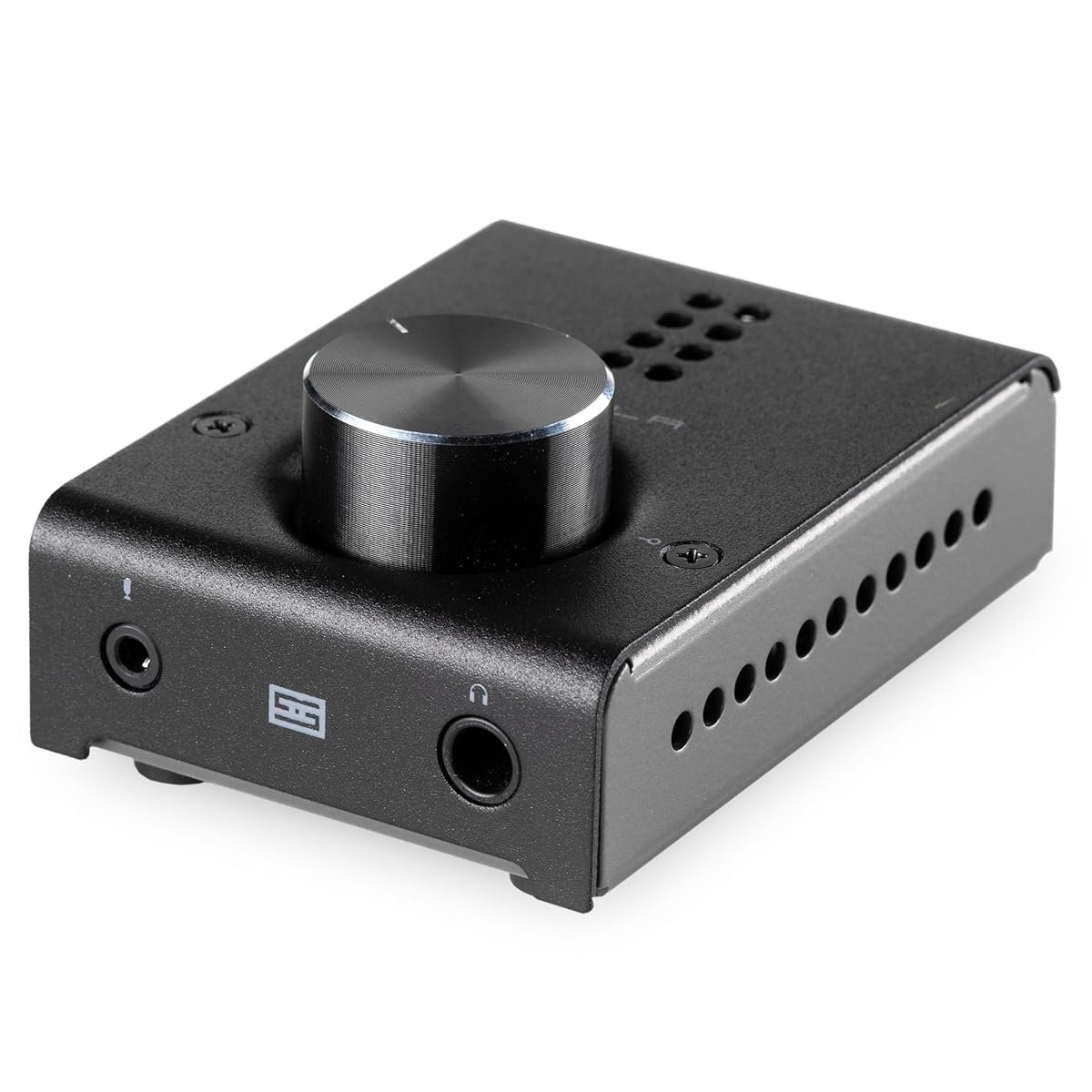
Schiit Fulla E
USB-C DAC/amp • AKM AK4490 DAC • 3.5mm + RCA • Microphone input • American-made
Schiit (pronounced “shit” — yes, deliberately) is the audiophile brand that made desktop DACs approachable for non-audiophiles. The Fulla E is their gaming-aware entry product, and the headline feature is the 3.5mm microphone input on the back. That’s rare in audiophile DACs — most pure-audio DACs assume your mic routes through a separate USB interface. The Fulla E lets you plug a 3.5mm gaming headset mic (detachable boom, most common style) directly into the DAC, saving a USB port and simplifying your setup.
The AKM AK4490 DAC chip is premium-grade silicon — the same family used in audiophile components up to the SAR 3,000+ range. Sound signature is neutral and detailed, closer to the iFi Zen DAC V2’s audiophile presentation than the FiiO’s entry-tier tuning. American design and manufacturing show in the build: solid aluminum chassis, satisfying physical volume knob with a slightly resistant detent, high-quality jacks. For a product under SAR 700, the Schiit feel and finish is exceptional.
Drives 16–300 ohm headphones comfortably. Sennheiser HD 560S at 120 ohm sounds excellent. Beyerdynamic DT 770 Pro at 80 or 250 ohm both work well. For gaming specifically, the mic input is the differentiator — if you own a headset with a detachable 3.5mm boom mic (like the Beyerdynamic MMX 300 or HyperX Cloud II), the Schiit is the single-box solution that the FiiO and iFi can’t match. No bass boost or EQ features — this is a pure audiophile chain with gaming accommodation, not a gaming-feature-rich DAC.
- Rare mic input — gaming-aware design
- AKM AK4490 — premium DAC silicon
- American-made with excellent build
- USB-C modern connectivity
- No bass boost or EQ controls
- KSA Schiit retail availability is spotty
- No balanced output
- Most expensive at SAR 699
| DAC chip | AKM AK4490 (32-bit / 192kHz) |
| Connection | USB-C |
| Outputs | 3.5mm headphone + RCA line |
| Mic input | 3.5mm (rare at this class) |
| Drives | 16–300 ohm headphones |
You own or plan to use a 3.5mm gaming headset mic (detachable boom style), you value audiophile-grade audio with practical gaming design, and the American-made provenance matters to you. The single-box setup beats the USB mic + separate DAC workflow for convenience.
Hidden Costs (the math nobody tells you)
- Cable upgrade reality (iFi Zen DAC V2): The Zen DAC V2 ships with a USB-A to USB-B cable. Modern MacBooks and USB-C-only gaming laptops need a USB-C to USB-B adapter or replacement cable (SAR 30–60). Budget this upfront. Quality USB cables for audio don’t matter — don’t fall for audiophile forum debates about “musical USB cables” (that’s genuine snake oil); any certified USB cable will deliver identical bits.
- Schiit Fulla E KSA retail situation: Schiit doesn’t have strong Middle East distribution. Amazon.sa availability is sporadic — stock can disappear for 2–4 weeks between restocks. When you see it in stock at fair price, grab it. Alternative: Schiit’s US-direct website ships internationally but adds shipping + customs cost (~SAR 100–150 extra). Factor these scenarios.
- Balanced headphone cable (iFi Zen DAC V2 4.4mm): The 4.4mm Pentaconn balanced output is only useful if your headphones support balanced cables. Most gaming headsets don’t. Audiophile headphones like Sennheiser HD 560S need a third-party balanced cable upgrade (SAR 200–400 depending on quality). You can use the 6.3mm single-ended output for standard headphones — no penalty for not using balanced.
- AC power for desktop DACs: All three of these products are USB-powered from your PC. Power draw is minimal (<5W) and doesn't add meaningfully to your SEC bill. However, USB power quality from cheap motherboards can introduce noise. For audiophile-critical listening, a powered USB hub (SAR 120–200) can improve signal cleanness. Overkill for most gaming use cases, but worth knowing.
- Warranty KSA reality — three niche brands: FiiO Middle East handles warranty through authorized Amazon.sa listings and dealer network — 1 year standard, verify the listing’s warranty terms. iFi Audio has minimal KSA presence; warranty routes through iFi’s regional distributor in UAE or Europe — plan for logistics if something breaks. Schiit Fulla E typically has 5-year Schiit warranty but KSA warranty claim process involves shipping back to the US — check Amazon.sa’s return policy as primary protection.
Things Saudi Gamers Should Know Before Buying
A DAC/amp is not a gaming surround processor. None of these three products deliver virtual 7.1 surround like Creative Sound BlasterX G6 does. They’re audiophile DACs focused on pure signal fidelity, not spatial audio processing. For virtual surround (Dolby Atmos for Headphones, DTS:X), your gaming motherboard or Windows Sonic can still process the audio — the DAC just makes the processed output sound cleaner. This is the key conceptual difference between “gaming DACs” (Creative, ASUS STRIX DACs) and “audiophile DACs” (FiiO, iFi, Schiit). Know which category you’re in.
Headphone impedance matching matters more than dollar spent. A SAR 300 FiiO E10K TC paired with matched-impedance headphones will sound better than a SAR 1,500 DAC paired with poorly-matched ones. High-impedance audiophile headphones (Beyerdynamic DT 880 Pro 250/600 ohm) genuinely need the Zen DAC V2 or Schiit tier. Mainstream gaming headsets (HyperX Cloud, Razer BlackShark) are low-impedance and the FiiO is plenty. Don’t over-buy.
PS5 and console DAC limitations. Sony’s PS5 restricts DAC use in specific ways: the FiiO E10K TC can work via USB for audio-only (no party chat because Sony blocks it), the iFi Zen DAC V2 is PC/Mac-only, and the Schiit Fulla E also routes primarily through PC. For genuine PS5 DAC-quality audio, your path is HDMI out to a stereo receiver, or using the PS5’s built-in audio to drive a good amp + dedicated gaming headphones. Not all three DAC/amps suit console-first gaming setups.
Saudi Arabia audiophile community. Riyadh and Jeddah have active audiophile communities on social media (Discord servers, Telegram groups) discussing DAC/amp recommendations. The FiiO and iFi are frequently recommended by the local community; Schiit has a smaller but passionate following. For newcomers, connecting with these communities before buying helps — some sell used gear at significant discounts, and hands-on listening events happen irregularly at specialist retailers like Mister Shahad or High End Audio Saudi.
Resale on audiophile gear in KSA. Audiophile DAC/amps hold value significantly better than gaming-branded audio on Haraj. FiiO E10K TC retains ~65–70% at 12 months — entry-level audiophile products have steady demand. iFi Zen DAC V2 retains ~70–75% (brand recognition in audiophile circles is strong). Schiit Fulla E retains ~60–65% (niche brand perception). If you upgrade to higher-tier audiophile chains later, recouping 60–75% of your initial investment is realistic. Gaming headsets can’t match this resale curve.
FAQ
Which is best for my first DAC/amp upgrade from motherboard audio?
FiiO E10K TC. SAR 299 is the right price to learn whether dedicated DAC/amps matter to you. If the improvement is noticeable to you, you’ll want to upgrade eventually — the E10K TC retains value on Haraj when you do. If the improvement isn’t noticeable, you’ve spent SAR 299 instead of SAR 599 or 699 to confirm.
Do DAC/amps work with gaming headsets or only audiophile headphones?
Both, but the improvement is more dramatic with audiophile headphones. Gaming headsets (HyperX Cloud, Razer BlackShark) already have driver tuning that compensates for motherboard audio limitations. Audiophile headphones (Sennheiser HD 560S, Beyerdynamic DT 880 Pro) were designed assuming a proper DAC in the signal chain — they sound compromised without one. If you own audiophile headphones, a DAC is mandatory. If you only own gaming headsets, a DAC is a nice-to-have.
Should I buy a DAC or a DAC/amp combo?
All three of these are DAC/amp combos — the amplifier is built-in. Separate DAC and separate amp (stacked) becomes relevant at higher tiers (Schiit Modius DAC + Magnius amp, SAR 1,500 combined) where high-impedance audiophile headphones need more amplification. For most Saudi gamers, a combo unit is the correct choice.
Can I use these for Tidal Hi-Fi or Apple Music Lossless?
Yes, all three support high-resolution audio. The iFi Zen DAC V2 specifically decodes MQA for Tidal Masters — the others don’t. For Apple Music Lossless, all three work equivalently. High-res audio noticeably benefits from any of these over motherboard audio.
Where in KSA can I audition audiophile DAC/amps?
Specialist retailers in Riyadh and Jeddah occasionally demo audiophile gear — Mister Shahad (Riyadh), High End Audio Saudi (Jeddah). Amazon.sa 30-day return is the practical path for most buyers. Saudi audiophile Discord/Telegram communities sometimes organize listening events — worth joining if serious.
Is the jump from FiiO E10K TC to iFi Zen DAC V2 worth SAR 300 more?
For audiophile headphones, yes. The Zen DAC V2’s ESS Sabre DAC and balanced output future-proof your audio chain for upgrades. For gaming headsets only, the FiiO is plenty — save the SAR 300 for better headphones. The golden rule: spend more on headphones than on DAC/amp. A SAR 500 headset on a SAR 1,000 DAC is worse than a SAR 1,000 headset on a SAR 500 DAC.
As an Amazon Associate, Kazazone earns from qualifying purchases. When you buy through our links, we may earn a small commission at no extra cost to you. This helps us keep creating honest, independent reviews for Saudi gamers.